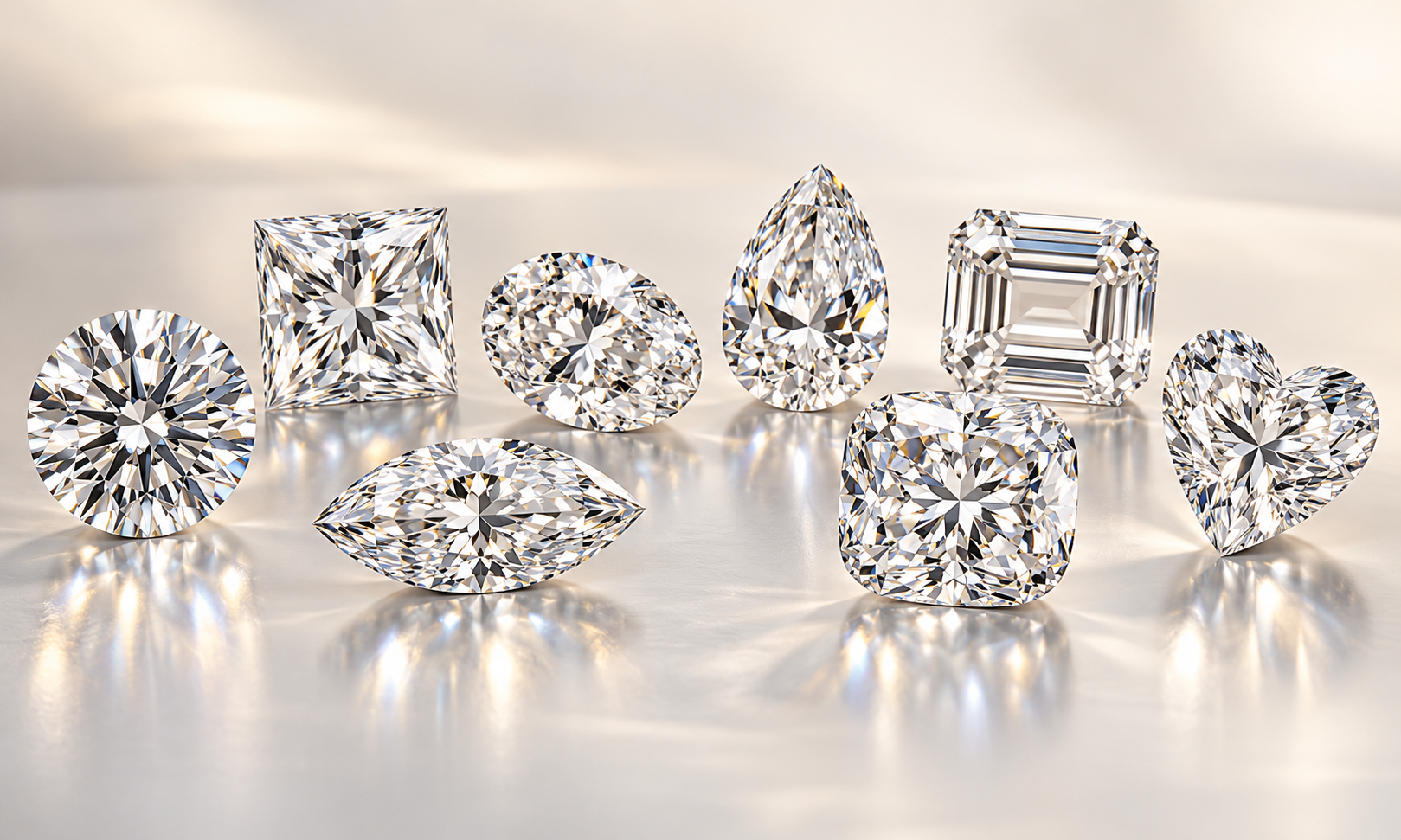
Loose Diamonds
Compare loose polished diamonds by shape, carat weight, color, clarity and cut before choosing a stone for an engagement ring or other fine-jewelry setting.

Compare loose polished diamonds by shape, carat weight, color, clarity and cut before choosing a stone for an engagement ring or other fine-jewelry setting.
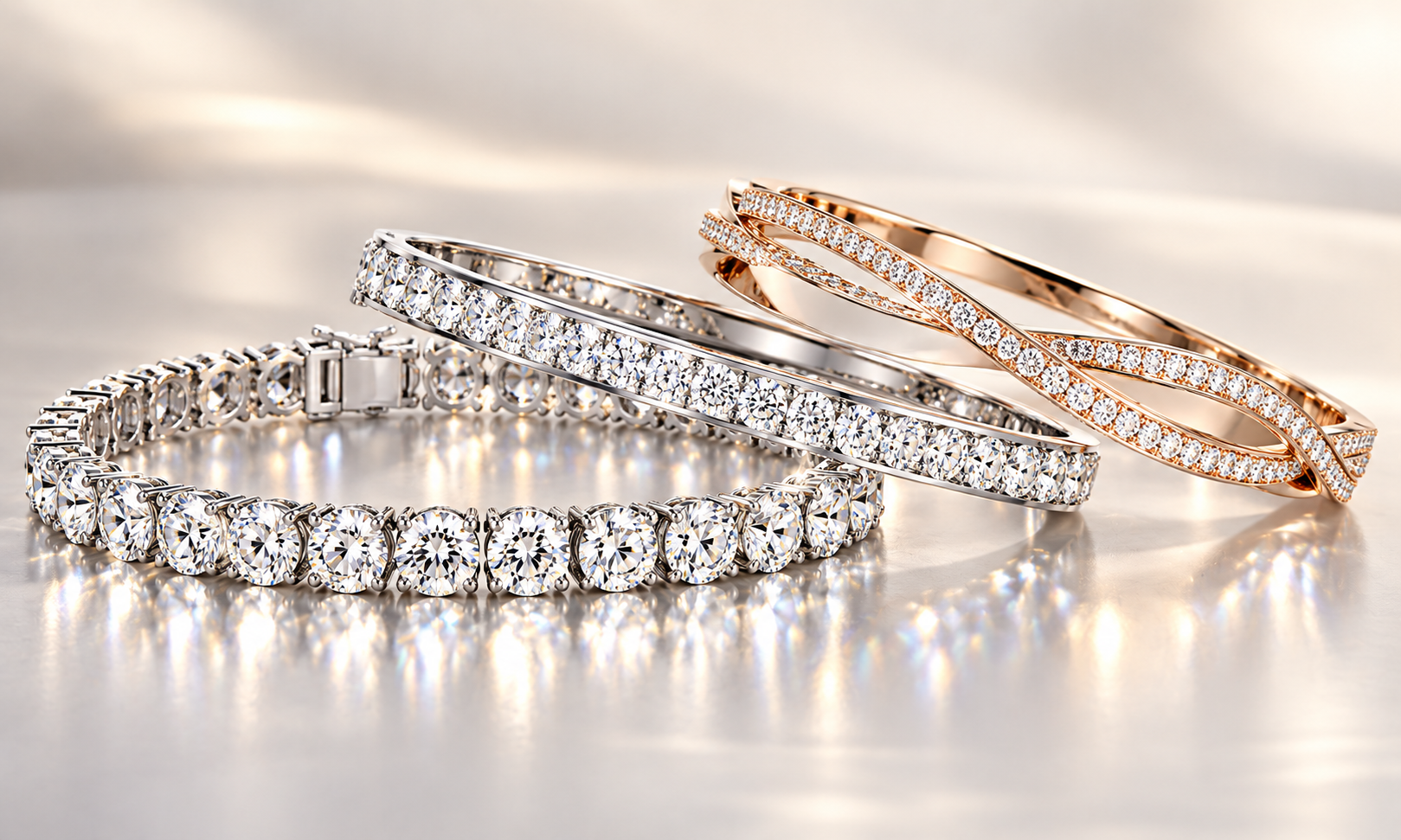
Explore diamond tennis bracelets, bangles and other bracelet styles, with choices in diamond quality, precious metals, lengths, clasps and settings.
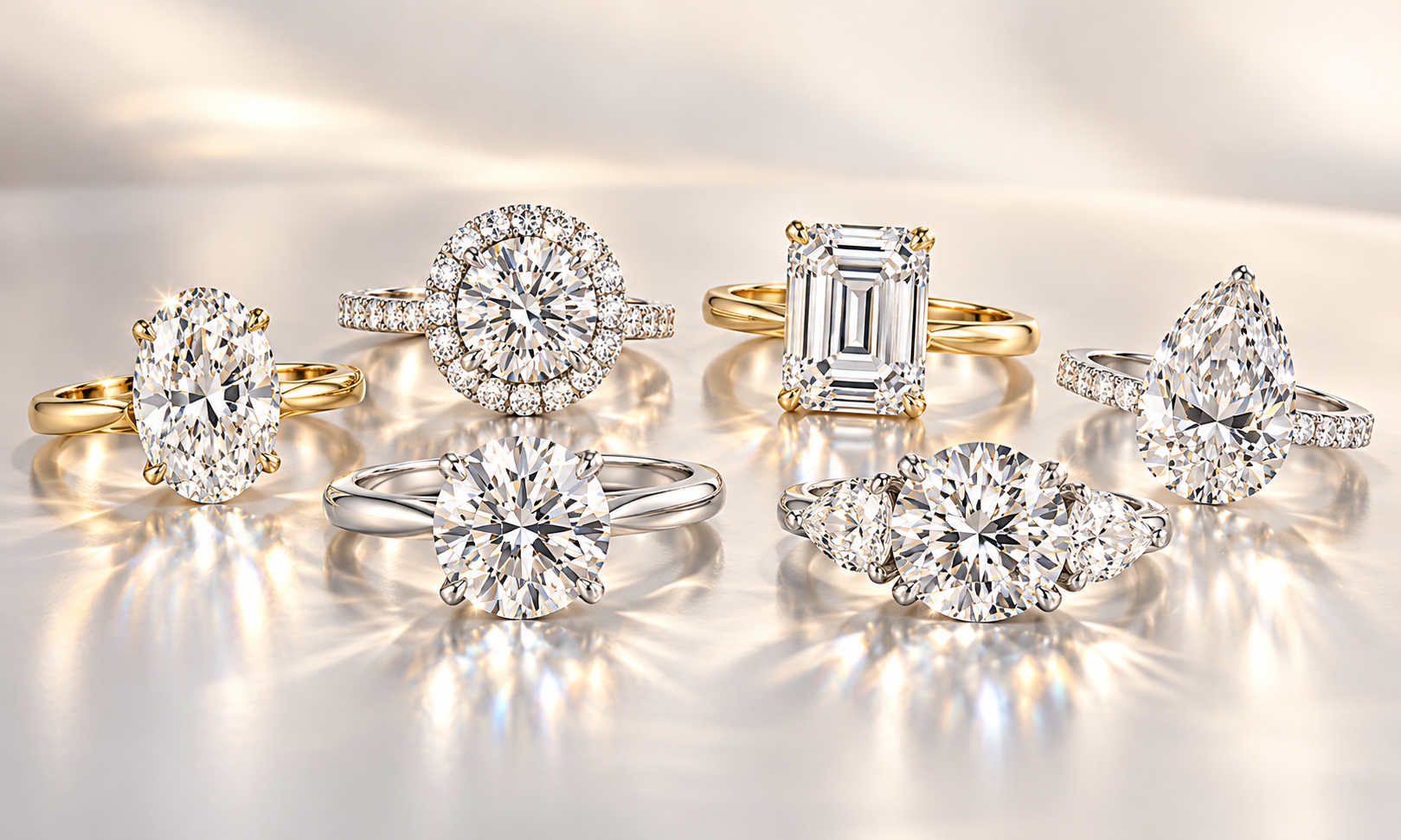
Browse diamond engagement rings in solitaire, halo, pavé, side-stone and other settings, with a wide range of diamond shapes, metals and design styles.
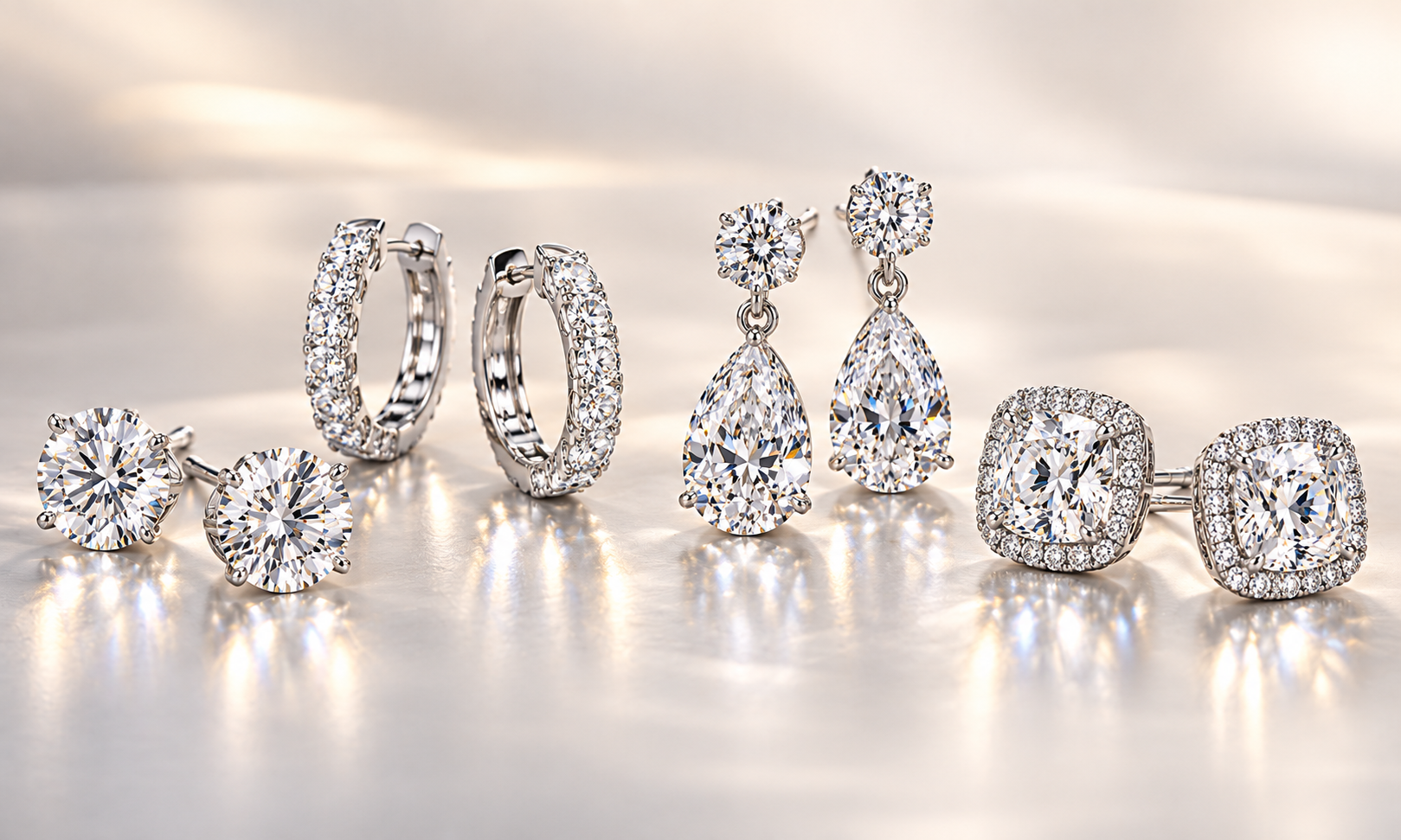
Discover diamond stud, hoop, drop and dangle earrings in classic and contemporary designs, with options in diamond size, quality, settings and precious metals.
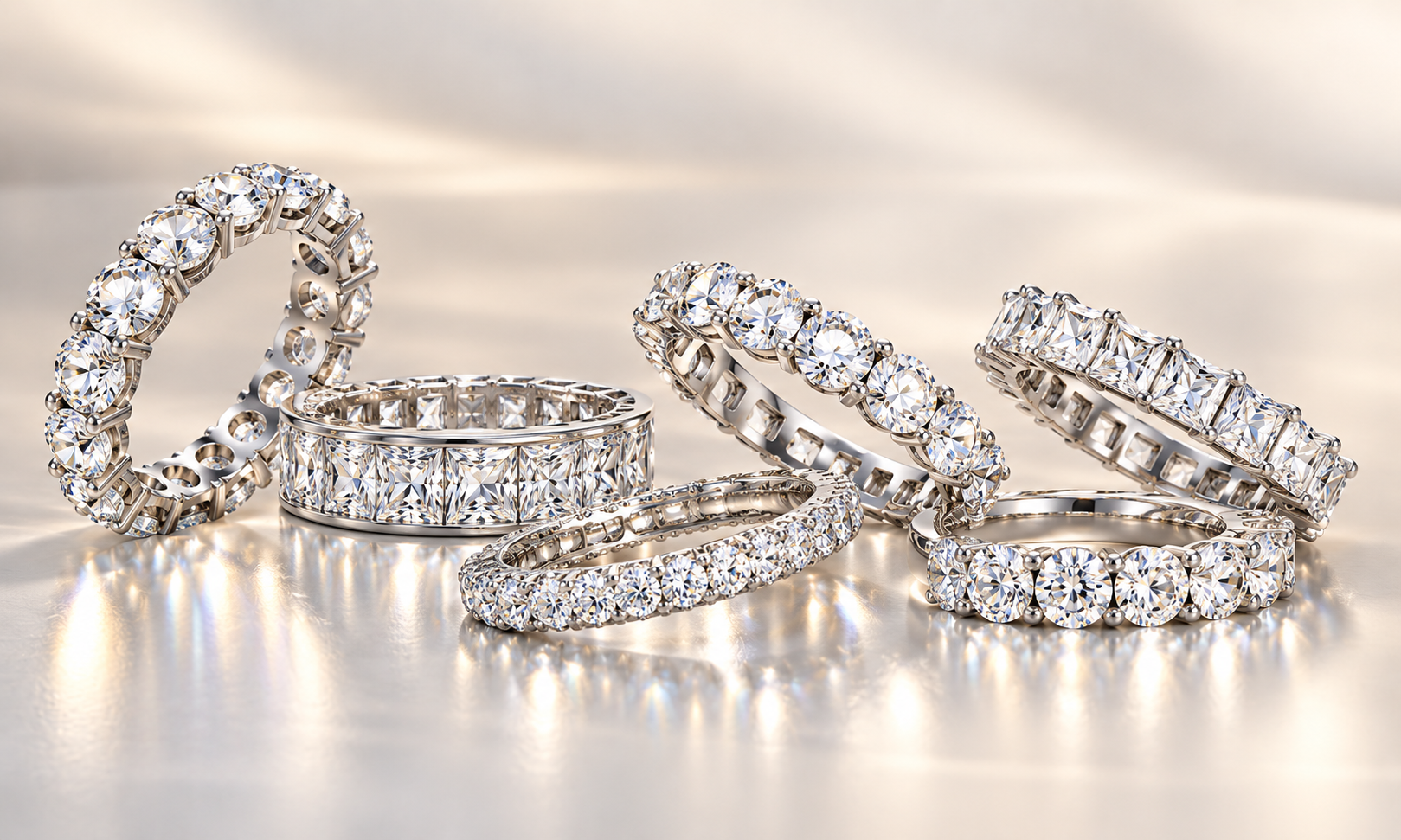
Explore full, three-quarter and half eternity rings featuring rows of diamonds in prong, channel, bezel and pavé settings for weddings and anniversaries.
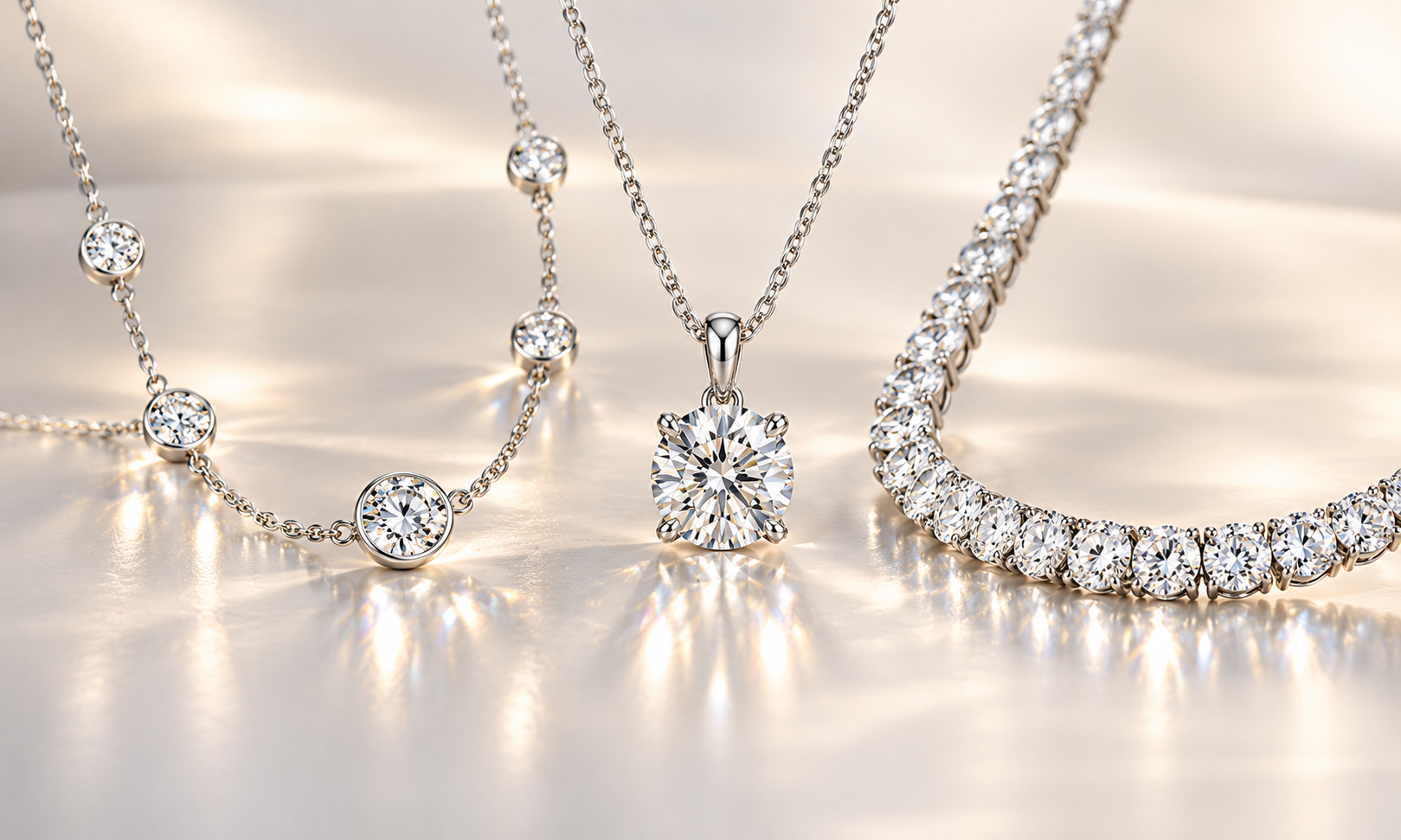
Browse solitaire, station, tennis, line and multi-diamond necklaces in a variety of lengths, diamond qualities, settings and precious-metal choices.
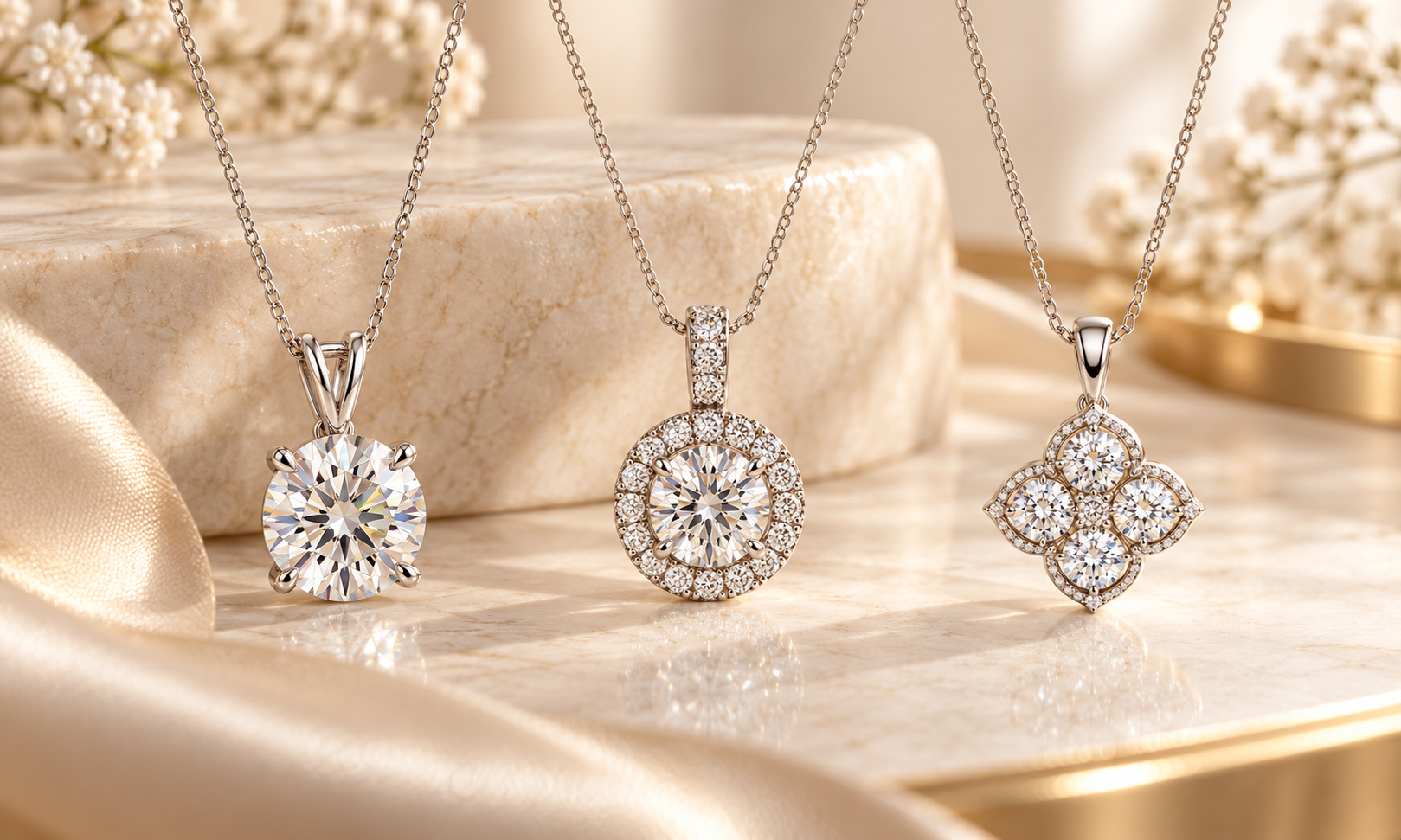
Explore diamond pendants ranging from classic solitaire designs to halos, clusters and symbolic styles, with choices in diamond shape, setting and chain design.
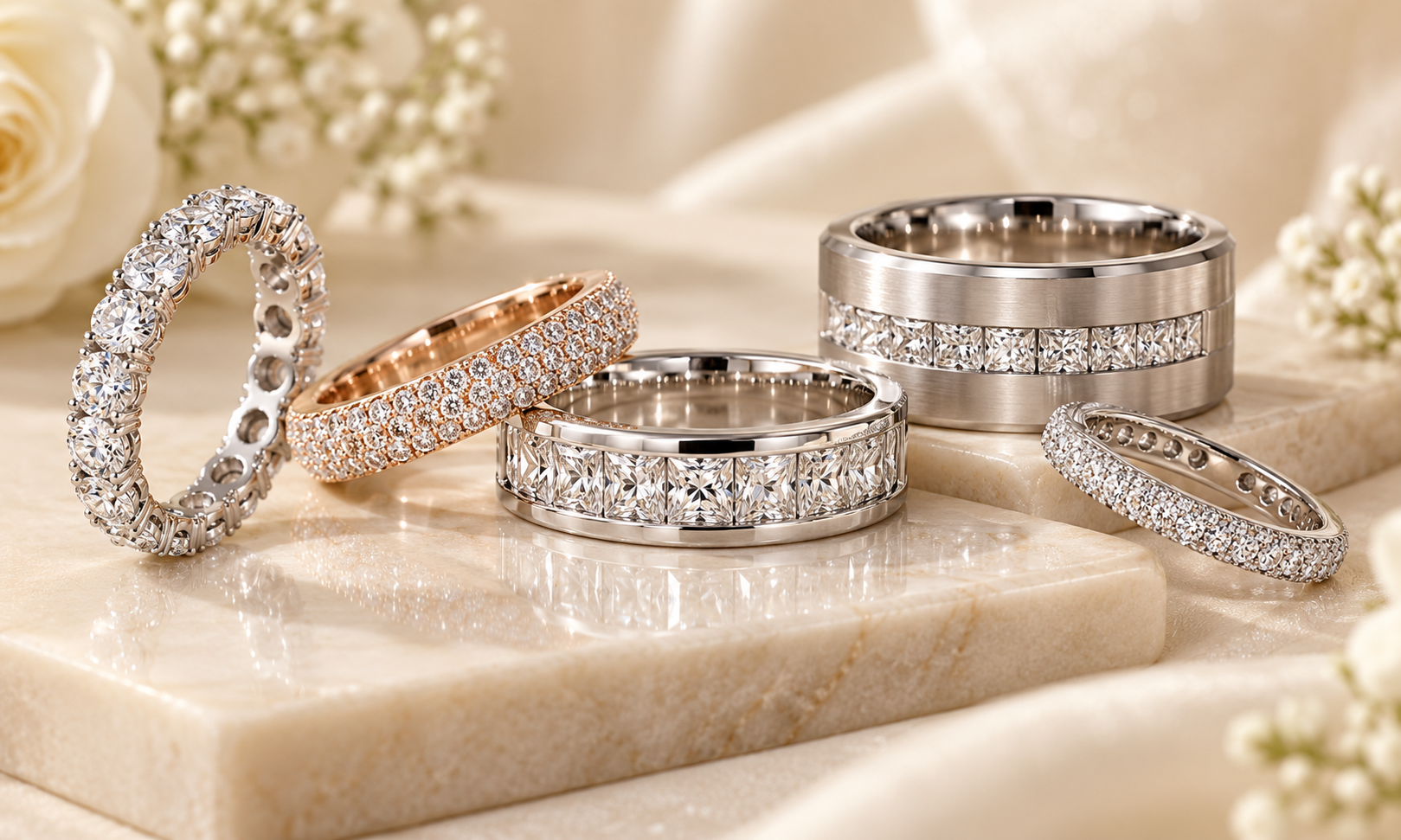
Compare diamond wedding rings and bands for women and men, including channel-set, pavé, anniversary and coordinating styles for engagement-ring pairings.
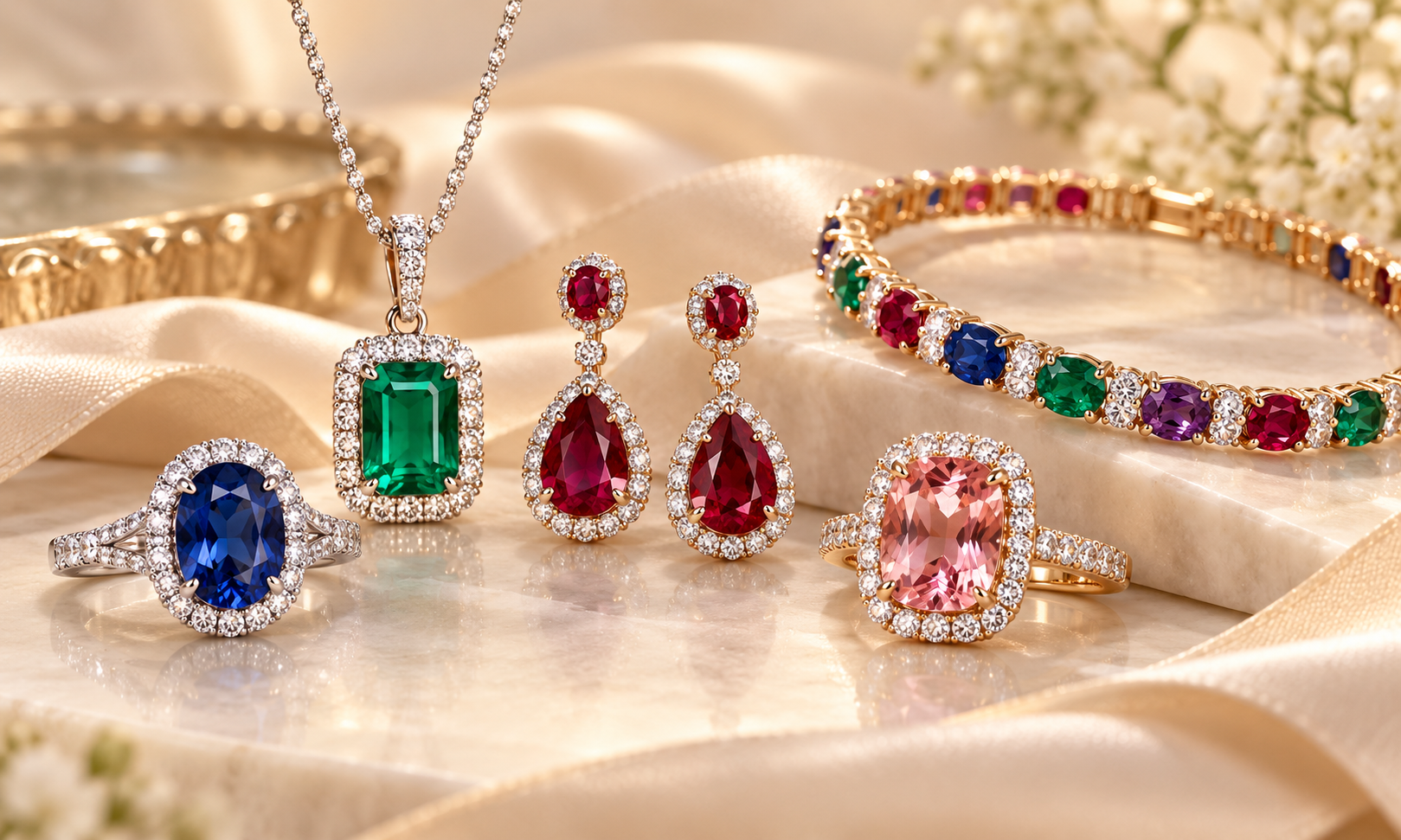
Explore jewelry featuring sapphires, rubies, emeralds, birthstones and other colored gemstones in rings, earrings, necklaces, bracelets and pendants.
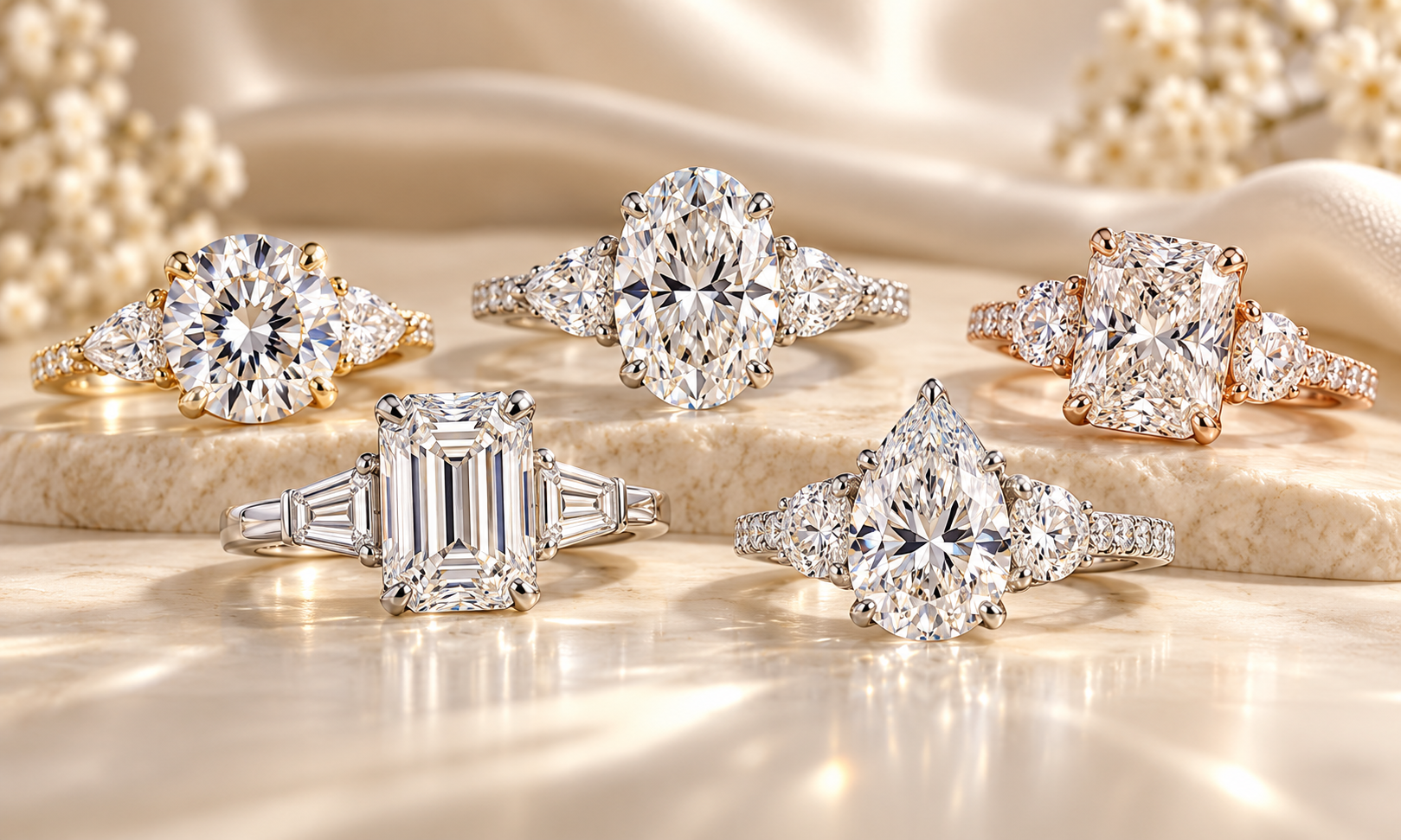
Discover pavé-set engagement rings with small diamonds placed closely along the band or setting to create added sparkle around the center diamond.
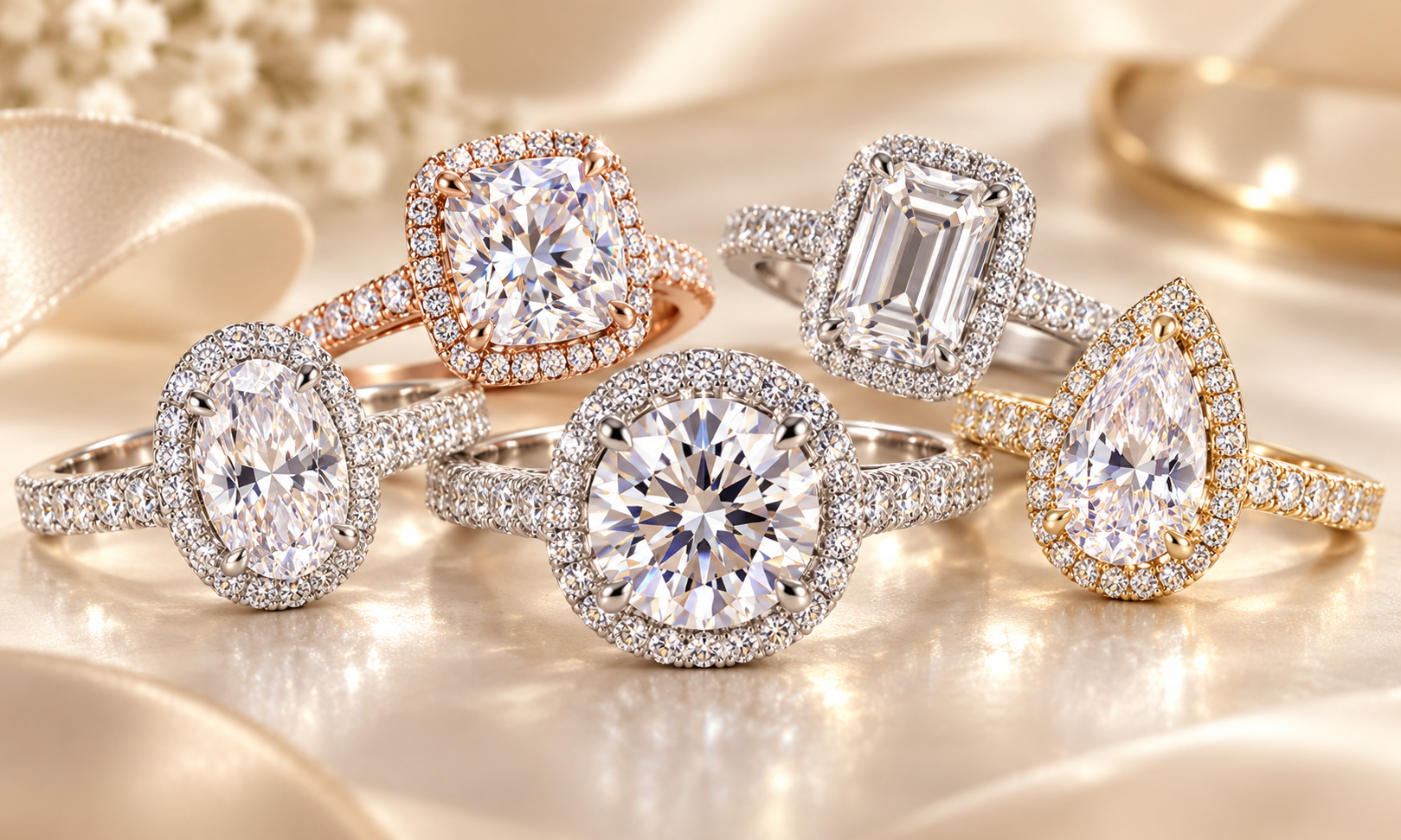
Explore engagement rings with accent diamonds beside the center stone, adding brilliance, width and visual interest in classic and contemporary designs.
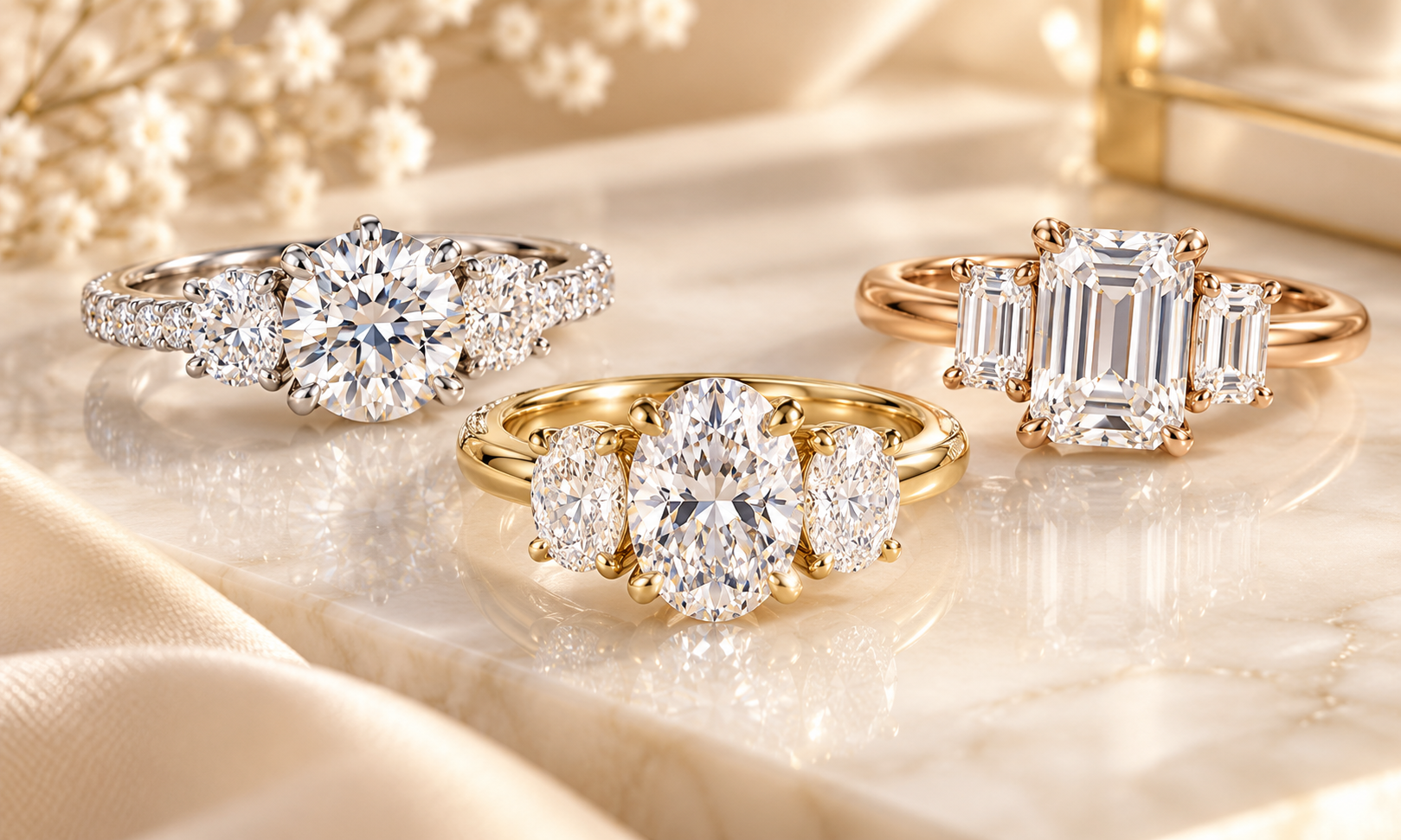
Browse three-stone engagement rings featuring a center diamond flanked by two side diamonds, a traditional design often associated with past, present and future.
Buying diamonds and fine jewelry online can offer important advantages, including a broad selection, convenient comparison shopping and access to merchants beyond your local area. The internet can make it easier to compare styles, prices, diamond characteristics, precious metals and seller policies before making a decision.
At the same time, diamonds and fine jewelry can represent a substantial purchase. A photograph and an advertised price do not tell the entire story. Buyers should also consider the seller's reputation, product documentation, return policy, warranty, shipping procedures, payment method and the exact characteristics of the item being purchased.
The DiamondAvenue Mall is designed to help shoppers discover and compare diamond and gemstone jewelry categories and merchants. Before purchasing from any seller, take the time to independently review the merchandise and the merchant's terms and policies.
Online shopping can provide access to a much larger selection than may be available from a single local jewelry store. Shoppers can compare loose diamonds, engagement rings, earrings, bracelets, necklaces, wedding bands and other jewelry in many styles and price ranges.
For loose diamonds, online inventories may include a wide range of shapes, carat weights, colors, clarity grades and cut qualities.
One of the strongest advantages of buying online is the ability to compare several similar items without traveling from store to store.
When comparing diamonds, look beyond the advertised price. Compare the Four C's, millimeter measurements, grading information, fluorescence, proportions and other characteristics that may affect appearance and value.
Online merchants may provide photographs, magnified images, 360-degree videos, grading information and detailed specifications that can be reviewed from home and revisited before making a decision.
This can give buyers more time to research a purchase rather than feeling pressured to make an immediate decision at a sales counter.
Online jewelry sellers may sometimes offer competitive prices because their inventory, staffing and operating structures differ from those of traditional retail stores.
However, price alone should not determine which diamond or piece of jewelry to purchase. Two items that appear similar may differ in diamond quality, metal weight, craftsmanship, grading documentation, warranty coverage and included services.
Compare the complete cost of the purchase rather than only the advertised item price. Depending on the transaction, the total may include the diamond or jewelry item, setting, sizing, engraving, shipping, insurance, sales or use tax and additional service charges.
A lower initial price may not represent the better overall value if another seller includes services, documentation or warranty coverage that you would otherwise have to purchase separately.
Before making a substantial online jewelry purchase, investigate the seller. Look for a clear business name, physical address, telephone number and accessible customer-service information.
Review customer feedback from more than one independent source. Consider how long the seller has been in business and whether buyers report satisfactory experiences involving product quality, shipping, returns, refunds, repairs and warranty service.
Do not rely solely on testimonials displayed on the seller's own website. Trade memberships, business ratings and industry affiliations may provide useful information, but they do not replace your own review of the merchandise, sales terms and return policy.
Make sure the description clearly identifies what is included in the sale. Determine whether a ring price includes both the center diamond and setting, whether a necklace or pendant includes the chain and whether an advertised carat weight refers to one diamond or the combined weight of several stones.
For jewelry containing many diamonds, look for the total carat weight, represented color and clarity ranges, metal type, metal purity, dimensions and setting details.
Determine whether the product contains natural diamonds, laboratory-created diamonds, enhanced or treated natural diamonds, or diamond simulants.
A lab-created diamond is a diamond produced in a laboratory. A simulant such as cubic zirconia or moissanite is a different material that may resemble a diamond. Treatments and enhancements should also be clearly disclosed where applicable.
The seller's description and documentation should accurately identify what you are buying.
For a significant loose diamond or important center stone, ask whether the diamond is accompanied by an independent laboratory grading report.
A grading report may describe characteristics such as carat weight, color, clarity, measurements, proportions, polish, symmetry, fluorescence and identifying features.
Verify the report number through the issuing laboratory's official report-check service whenever that service is available. If the diamond carries a laser-inscribed report number, the inscription may also help confirm that the stone corresponds with the report.
A diamond grading report and a jewelry appraisal are not the same thing.
A grading report describes characteristics of a diamond. An appraisal generally assigns a monetary value to jewelry for a particular purpose, such as insurance.
An appraisal value should not automatically be interpreted as the price for which the jewelry could be resold.
High-resolution photographs and videos can be very useful when comparing jewelry online, but screen images can be affected by lighting, magnification, camera settings and display calibration.
When possible, review multiple views of the item and pay attention to measurements. A photograph enlarged on a computer screen can make a diamond or piece of jewelry appear much larger than it will appear in person.
Carat is a measure of weight, not diameter. Two diamonds of the same carat weight can have different face-up dimensions because of differences in shape and proportions.
For loose diamonds and center stones, compare millimeter measurements in addition to carat weight. For finished jewelry, review the dimensions of the complete piece whenever they are provided.
A reasonable inspection and return period is especially valuable when buying jewelry online because the buyer does not physically handle the item before purchase.
Determine how many days you have to return the item and whether the return period begins on the shipment date or delivery date. Check whether return shipping, insurance or restocking charges apply.
Also determine whether engraving, ring sizing, custom manufacturing, special orders or other modifications make the item nonreturnable. Do not assume that every online jewelry purchase can be returned under the same terms.
Review the written warranty before purchasing. Find out what is covered and what is excluded, including manufacturing defects, loose stones, worn prongs, clasps, sizing and routine maintenance.
Some warranties may require periodic inspections or may exclude damage caused by normal wear, accidents or work performed by another jeweler.
If purchasing a ring, confirm the correct size before ordering and determine whether resizing is available.
Some designs, including certain full eternity rings and highly detailed bands, may be difficult or impractical to resize. Ask about sizing limitations before completing the purchase.
Use a payment method that creates a clear transaction record. Credit cards may provide billing-dispute protections, although those protections do not replace the seller's written return and refund policies.
Be especially cautious when an unfamiliar seller insists on payment methods that are difficult to reverse or trace.
Before entering payment information, make sure you are on the intended merchant's website and that the checkout page uses a secure encrypted connection.
Be cautious of links in unexpected emails, text messages or online advertisements that imitate jewelry retailers. When in doubt, navigate directly to the merchant's official website rather than following an unfamiliar link.
Valuable diamonds and jewelry should be shipped by a secure method with appropriate insurance. Confirm who bears the risk if the package is lost or damaged before delivery.
For expensive purchases, signature confirmation is an important consideration so the package is not simply left unattended at a door.
Inspect the shipment as soon as practical after delivery. Confirm that the item received matches the order and review the jewelry carefully during the seller's return period.
Keep packaging, receipts, grading reports and other documents until you are certain that you intend to keep the purchase.
Buying from an online or out-of-state seller does not necessarily eliminate sales or use tax. Depending on the transaction and applicable law, the seller may collect tax at checkout or the buyer may have a separate use-tax obligation.
Consider applicable taxes when comparing the total cost of competing offers rather than assuming that an online purchase will automatically be tax-free.
For an expensive diamond or piece of jewelry, consider having the item examined during the return period by a qualified independent gemologist or appraiser who does not sell the item and has no financial interest in the transaction.
An independent examination may help confirm that the diamond corresponds with its grading documentation and may identify damage, treatments, setting concerns or other conditions that were not obvious in online photographs.
For valuable jewelry, consider arranging appropriate insurance after you decide to keep the item.
Keep the purchase receipt, photographs, grading documentation and any appraisal in a safe place. Your insurer can explain what documentation is required and what types of loss are covered.
Buying diamonds and jewelry online can combine selection, convenience and the ability to compare many products and merchants. Those advantages are most useful when the buyer also takes the time to understand exactly what is being offered and the terms under which it is being sold.
A strong online purchase decision considers the complete picture: the quality and appearance of the jewelry, the accuracy of the description, the reputation of the seller, the documentation provided, the total price, the return policy, warranty protection, secure payment and shipping, and the opportunity to inspect the item after delivery.
The goal is not simply to find the lowest advertised price. It is to find a diamond or piece of jewelry that meets your expectations and is purchased from a seller whose policies give you confidence in the transaction.
DiamondAvenue.com provides additional educational information to help shoppers understand diamonds, diamond jewelry and the characteristics that influence appearance and value.
Diamond Buying Guide | The Four C's | Carat Weight | Clarity | Color | Cut
Diamond Shapes | Lab-Created Diamonds | Enhanced Natural Diamonds | Diamond Simulants | Diamond Care