
All Brands
Browse a broad selection of side-stone diamond engagement rings from featured jewelry brands and merchants.

Browse a broad selection of side-stone diamond engagement rings from featured jewelry brands and merchants.
Explore side-stone diamond engagement rings and fine jewelry selections from AnuClub.
Explore side-stone diamond engagement rings and jewelry selections from Gem Stone King.
Browse side-stone diamond engagement rings and fine jewelry from Houston Diamond District.
Explore modern and contemporary side-stone diamond engagement ring styles.
Explore side-stone diamond engagement rings and jewelry selections from MOOSEA.
Browse side-stone diamond engagement rings and jewelry selections from THELANDA.
Browse side-stone diamond engagement rings and jewelry selections from Sonia Jewels.
Affiliate Disclosure: DiamondAvenue.com may earn a commission from qualifying purchases made through affiliate links at no additional cost to you.
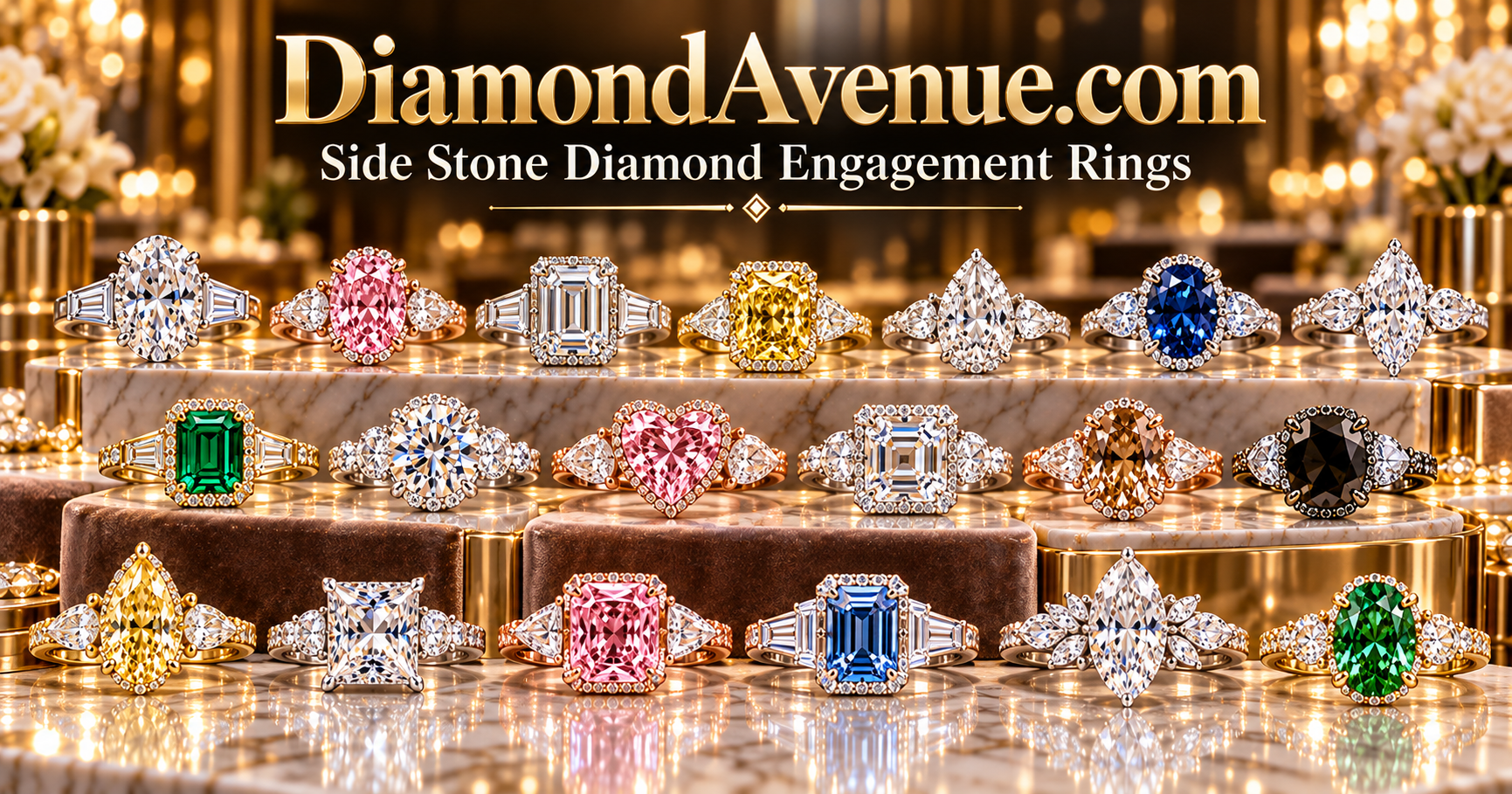
Side-stone diamond engagement rings feature one or more accent diamonds placed beside the center stone. These side diamonds can add brilliance, width and visual interest while helping the center diamond appear larger or more prominent.
When comparing side-stone engagement rings, look at more than total sparkle. The size, shape, quality and placement of the side diamonds, the security of the settings, the width and construction of the band, the center-stone proportions, the metal and the way the ring will pair with a wedding band can all affect the finished appearance and long-term wear.
A side-stone engagement ring places additional diamonds along the shoulders or sides of the center diamond. The side stones may be small accents or substantial diamonds that become an important part of the overall design.
Side stones can be prong-set, channel-set, bezel-set, pavé-set or incorporated into more elaborate decorative settings.
Side stones can increase overall brilliance and create a more substantial look without relying entirely on the center diamond for visual impact.
They can also help create a smooth transition from the center setting into the ring's band and can give the design a more balanced or decorative appearance.
Some rings use side diamonds that closely match the center diamond in shape or overall style.
Matching can create a symmetrical, coordinated look and make the ring appear broader across the finger.
Other designs intentionally pair a center diamond with different side-stone shapes, such as tapered baguettes, pears, trapezoids or smaller rounds.
Contrasting shapes can emphasize the center stone and create a distinctive architectural appearance.
Some settings use several side stones on each shoulder instead of one larger stone per side.
This can create more continuous sparkle and may visually resemble a pavé or graduated side-stone design.
Side diamonds should generally look well matched to one another in size, color, clarity and overall brightness when the design is intended to be symmetrical.
Small differences may not be noticeable, but obvious mismatches can make the ring appear uneven. The larger the side diamonds, the more important their individual quality and matching become.
Side stones do not need to duplicate the center diamond's exact grade, but they should complement it visually.
Strong color or brightness differences can be noticeable when stones sit close together.
Side stones should support the visual importance of the center diamond rather than compete with it unless the design intentionally gives all stones similar prominence.
Larger side stones create a broader, more dramatic appearance, while smaller accents can highlight the center stone more subtly.
Carat weight alone does not tell you how large a diamond will appear. Compare millimeter dimensions, especially when side stones use different shapes from the center diamond.
Proportion and face-up dimensions can matter as much as weight in achieving a balanced design.
Side-stone rings may advertise a total carat weight for the accent diamonds. Read the description carefully to determine whether the stated weight includes only the side diamonds, all accent diamonds or the center stone as well.
Two rings with the same total carat weight can look very different depending on how that weight is distributed among the center and side stones.
Round diamonds can add bright, even sparkle and work with many center-stone shapes.
Baguette-shaped side diamonds can create a clean, elegant look and visually direct attention toward the center stone.
Fancy-shaped side diamonds can create a custom or architectural appearance and can help broaden the ring across the finger.
Each side stone should be securely held. Examine prongs, channels, bezels or shared-prong settings for symmetry and proper alignment.
Stones should not appear tilted, loose or unevenly spaced unless the design is intentionally asymmetrical.
Pear, marquise and other pointed side stones can have vulnerable tips. Look for settings that protect those areas appropriately.
The more exposed the side diamonds are, the more important secure setting work becomes for everyday wear.
Side-stone settings often extend across the shoulders of the ring, so the band's width and construction affect both appearance and durability.
Very delicate bands may look elegant but should still have enough structure for regular wear.
Platinum, white gold, yellow gold and rose gold can all be used in side-stone engagement rings. The metal affects color, contrast, maintenance and overall style.
White metals can visually blend with colorless diamonds, while yellow or rose gold can add warmth and contrast.
Larger side stones can make a ring wider across the top of the finger. This may create a luxurious appearance, but it can also affect comfort depending on finger shape and the ring's profile.
Look at how far the stones extend down the sides of the finger and whether any setting edges or prongs may rub against neighboring fingers.
Side-stone rings can be more difficult to resize than plain solitaire bands, particularly when diamonds extend far around the shoulders or when the setting uses intricate shared-prong, channel or pavé construction.
Significant resizing can change stone spacing or place stress on the settings.
Determine the correct ring size before ordering and ask how much the specific design can be resized later.
The shape and height of the center and side-stone settings can affect how a wedding band sits beside the engagement ring.
Some side-stone engagement rings allow a straight wedding band to sit flush, while others may require a curved or contoured band. If a close fit is important, consider the wedding-band pairing before purchasing the engagement ring.
Every additional diamond has its own setting points, prongs or channels. Normal wear can gradually affect these small areas of metal.
Periodic professional inspection can help identify loose stones or worn settings before a diamond is lost.
Dirt, soap, lotion and oils can collect beneath and between closely set stones. Regular appropriate cleaning helps maintain brilliance.
Follow the jeweler's recommendations and consider professional cleaning and inspection for intricate settings.
For a significant center diamond, consider an independent laboratory grading report describing characteristics such as carat weight, color, clarity, measurements, proportions, polish, symmetry and fluorescence.
Verify the report number through the issuing laboratory when an online verification service is available.
Small side diamonds are often described by an overall color and clarity range rather than by individual grading reports.
Online images are often enlarged. Review actual millimeter measurements, total carat information, band width and the dimensions of the center and side stones.
Multiple angles and 360-degree videos can help show the ring's profile, setting height, side-stone coverage and wedding-band compatibility.
Before purchasing, review the return period and determine whether sizing, engraving or customization affects your ability to return the ring.
Also review warranty terms involving loose side stones, repairs, manufacturing defects and required inspections.
A well-designed side-stone engagement ring can make the center diamond look more impressive while adding beauty and brilliance across the finger. The strongest designs balance the size and quality of the center and side diamonds with secure settings, comfortable proportions and durable construction.
Comparing the stones, settings, band, sizing options, wedding-band fit and long-term maintenance requirements can help you choose a ring that looks beautiful at purchase and continues to perform well with regular wear.
Diamond Engagement Rings | The Four C's | Diamond Shapes | Diamond Care