All Brands
Browse a broad selection of diamond necklaces from featured jewelry brands and merchants.

Browse a broad selection of diamond necklaces from featured jewelry brands and merchants.
Explore diamond necklaces and jewelry selections from the Amanda Rose Collection.
Explore diamond necklaces and classic jewelry styles from the Amazon Collection.
Browse diamond necklaces and fine jewelry selections available from Angara.
Browse diamond necklaces and jewelry selections available from Beam & Bask.
Explore diamond necklaces and jewelry selections available from Belacqua.
Explore diamond necklaces and jewelry from the DazzlingRock Collection.
Browse diamond necklaces and fine jewelry selections available from Friendly Diamonds.
Explore diamond necklaces and jewelry selections available from GUILDED.
Browse diamond necklaces and jewelry selections available from KISPER.
Browse diamond necklaces and fine jewelry from Houston Diamond District.
Explore diamond necklaces and jewelry selections available from Privosa Fine Jewelry.
Browse diamond necklaces and fine jewelry selections available from shownii.
Explore diamond necklaces and contemporary necklace styles from The Diamond Deal.
Affiliate Disclosure: DiamondAvenue.com may earn a commission from qualifying purchases made through affiliate links at no additional cost to you.
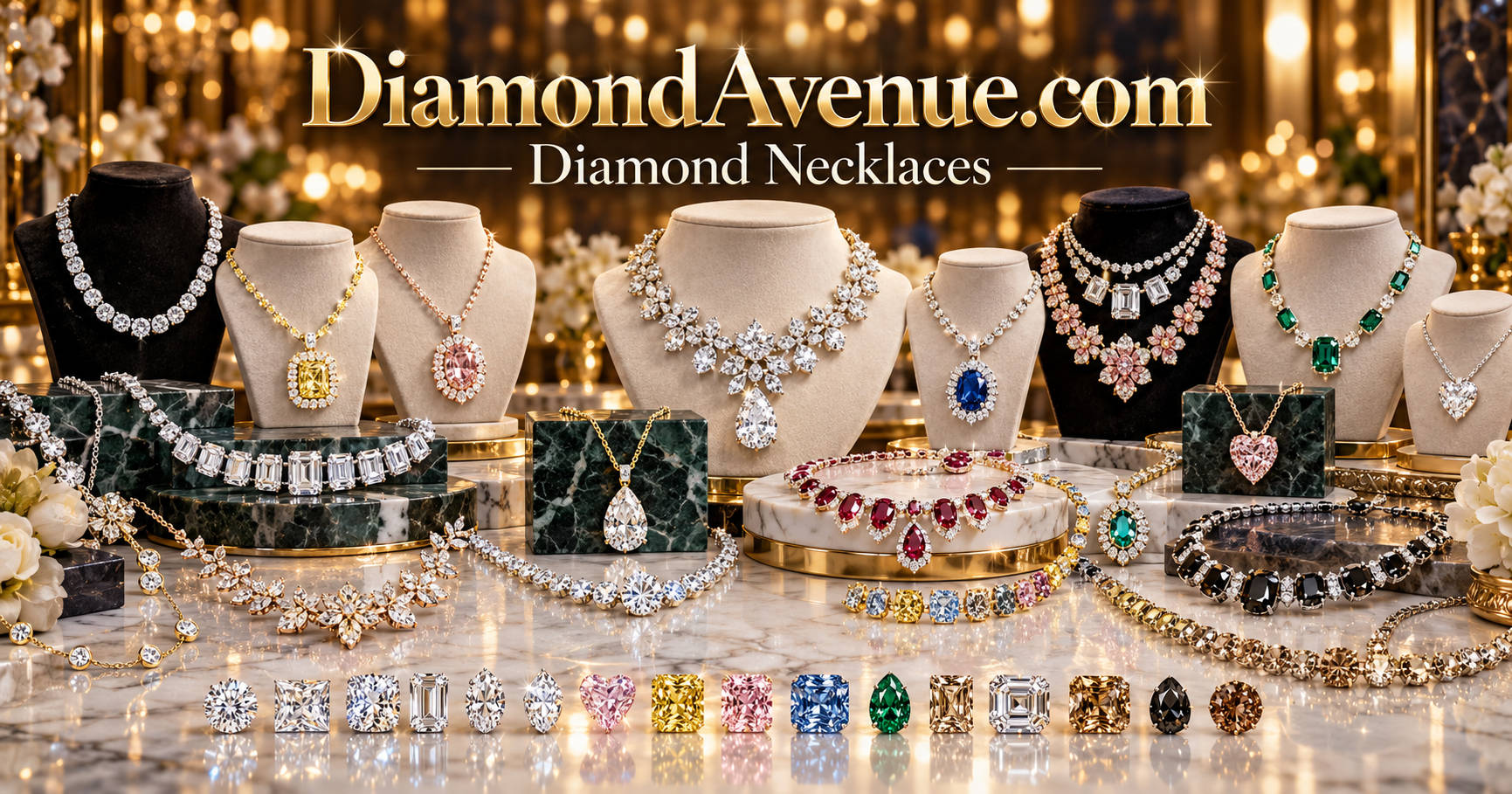
Diamond necklaces range from delicate everyday pieces to elaborate designs containing many diamonds. Popular styles include solitaire diamond necklaces, diamond station necklaces, tennis or line necklaces, halo and cluster designs, and necklaces combining diamonds with other gemstones.
When comparing diamond necklaces, consider not only appearance and price, but also diamond quality, total carat weight, necklace style, setting construction, precious metal, chain length, clasp security and how the necklace will sit when worn. Understanding these features can make it easier to compare different pieces and select a necklace suited to the wearer's style and intended use.
A solitaire diamond necklace places a single diamond at or near the center of the necklace. The diamond may be held by prongs, a bezel or another setting and is usually intended to be the primary visual focus of the piece.
With a solitaire design, the characteristics of the individual diamond—including cut, color, clarity, carat weight and shape—can have a strong influence on the overall appearance.
Diamond station necklaces place individual diamonds or groups of diamonds at intervals along a chain. The diamonds may be bezel set, prong set or incorporated into decorative links.
These necklaces can provide a lighter, more understated look than a continuous diamond necklace while still distributing sparkle across the neckline.
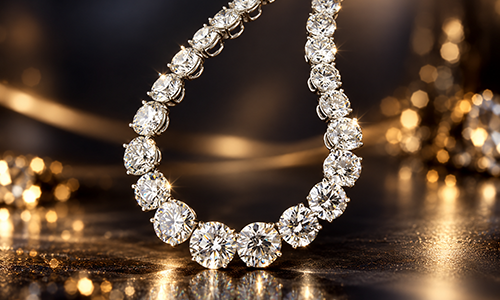
A diamond tennis or line necklace typically contains a continuous or nearly continuous row of diamonds. These necklaces can range from relatively delicate designs to substantial pieces containing many carats of diamonds.
Because numerous diamonds are positioned next to one another, matching in size, color, brilliance and setting alignment is particularly important.
Halo and cluster necklaces use groups of smaller diamonds to create a larger visual impression. A halo may surround a center diamond or gemstone, while cluster designs arrange several diamonds together as one decorative element.
These styles can provide substantial sparkle without relying on a single large diamond. When comparing them, look at the total carat weight, the number of stones, the quality of the diamonds and the security and symmetry of the settings.
Some necklaces combine diamonds with sapphires, rubies, emeralds or other colored gemstones. In these designs, diamonds may serve as accents, halos or connecting elements.
Consider the quality and durability of all gemstones used in the necklace, not only the diamonds. The cleaning and care requirements may also depend on the least durable gemstone or material in the piece.
The same Four C's used to evaluate loose diamonds—carat weight, color, clarity and cut—also influence the appearance and value of diamonds used in necklaces.
Cut: Cut influences brilliance, fire and sparkle. Well-cut diamonds can appear brighter and more lively than poorly proportioned diamonds of similar weight.
Color: Diamond color can be especially noticeable when several diamonds are positioned next to one another. A well-matched necklace generally has diamonds that appear reasonably consistent in color.
Clarity: Clarity refers to internal inclusions and external blemishes. In necklaces containing many small diamonds, extremely high clarity grades may not always produce a visible difference without magnification.
Carat Weight: Multi-diamond necklaces are often advertised using total carat weight, meaning the combined weight of all diamonds in the necklace. A stated total weight does not describe the size of each individual diamond.
In necklaces containing many diamonds, matching can be just as important visually as the grade of any single stone. Diamonds that differ noticeably in size, color, shape or brilliance can make a continuous design appear uneven.
For tennis necklaces, station necklaces and other multi-diamond designs, look for reasonable consistency in diamond diameter, shape, color, brilliance and setting height.
Always determine whether an advertised carat weight refers to a single center diamond or to the combined weight of all diamonds in the necklace.
Two necklaces with the same total carat weight may look very different. One may contain many small diamonds, while another may use fewer and larger diamonds. Compare the number of stones and their approximate individual size in addition to total carat weight.
Round brilliant diamonds are commonly used in necklaces because of their strong potential for brilliance, but many other shapes can create distinctive designs.
Princess, oval, pear, emerald, marquise, cushion and other diamond shapes may be used as center stones or throughout a necklace. In multi-diamond designs, the shapes and proportions should appear reasonably consistent when matching is part of the design.
Prong settings expose much of the diamond and can emphasize brilliance. Bezel settings surround all or part of the diamond with metal and may provide additional protection around its edge.
Channel, pavé and shared-prong settings are frequently used in necklaces containing multiple diamonds. Whatever the setting style, the diamonds should appear secure, evenly positioned and properly aligned.
The metal used in a diamond necklace affects its appearance, durability, weight, maintenance requirements and price. Common choices include white gold, yellow gold, rose gold and platinum.
White Gold: White gold provides a bright appearance that blends naturally with colorless diamonds. Many white-gold jewelry pieces are rhodium plated to produce an especially white and reflective finish.
Yellow Gold: Yellow gold provides a warm, traditional appearance and can create an attractive contrast with white diamonds.
Rose Gold: Rose gold has a warm pinkish tone and can give a diamond necklace a softer or more contemporary appearance.
Platinum: Platinum is naturally white, dense and highly durable. It is commonly used in fine jewelry where strength and long-term wear are important considerations.
14K and 18K Gold: Fourteen-karat gold contains approximately 58.5 percent pure gold, while 18K gold contains 75 percent pure gold. The choice involves balancing gold content, durability, appearance and price.
Necklace length affects where the diamonds rest on the chest and how the piece works with different necklines. A shorter necklace generally sits higher on the neck, while longer necklaces fall lower on the chest.
Common necklace lengths include approximately 16, 18, 20 and 24 inches, although many other lengths are available. The wearer's neck size, height, clothing and personal preference can all influence the most comfortable and attractive length.
For necklaces with a valuable diamond centerpiece, the chain should be strong enough to support the weight of the diamonds and setting without appearing disproportionately heavy.
Inspect links, soldered connections and attachment points near the setting and clasp. A delicate chain may be appropriate for a small solitaire, while heavier diamond designs generally require more substantial construction.
The clasp is an important part of any valuable diamond necklace. Lobster clasps, spring-ring clasps, box clasps and other fastening systems are used depending on the weight and design of the necklace.
The clasp should close securely and operate smoothly. Substantial tennis and line necklaces may also use safety latches or other secondary security features.
A necklace should hang evenly when worn. Center diamonds or decorative sections should remain reasonably centered rather than constantly turning or flipping.
The weight of the setting, chain construction and placement of diamonds can all affect balance. For larger pieces, flexibility between links can also influence how comfortably the necklace follows the shape of the neck.
Natural diamonds formed within the earth over geological time before being mined, cut and polished for use in jewelry.
When purchasing a natural diamond necklace, review the seller's description of the diamonds, including represented color, clarity, total carat weight and any grading information that may be provided.
Lab-created diamonds are grown under controlled laboratory conditions. They have essentially the same crystal structure and chemical composition as natural diamonds but have a different origin.
The product description should clearly identify whether the diamonds are natural or laboratory-created. Diamond simulants such as cubic zirconia and moissanite are different materials and are not diamonds.
Before purchasing a diamond necklace, compare the complete piece rather than focusing only on total carat weight. Two necklaces with similar diamond weight can look very different depending on the number and size of the diamonds, diamond quality, necklace length, setting style, metal and craftsmanship.
Review whether the stated carat weight refers to one center diamond or the combined weight of all diamonds. Also check the represented diamond color and clarity, diamond shape, metal purity, necklace dimensions and setting construction.
Consider how and where the necklace will be worn. A delicate solitaire or station necklace may be well suited to everyday wear, while a substantial tennis necklace or elaborate multi-diamond design may be intended for more formal use.
Check the chain, links, settings and clasp carefully. Diamonds should be securely mounted, the necklace should hang evenly and the clasp should close firmly.
Review the seller's return policy, warranty, repair provisions and shipping or insurance policies before ordering. For higher-value necklaces, buyers may also wish to determine what diamond grading information, documentation or independent appraisal is available.
Because necklaces are frequently exposed to skin oils, cosmetics, lotions and hair products, proper cleaning can help maintain diamond brilliance. Periodic inspection can also help identify worn links, loose settings or clasp problems before a diamond or the necklace itself is lost.
Most importantly, choose a necklace that combines attractive diamonds with secure construction, appropriate length, comfortable fit and a style suited to the person who will wear it.
Understanding the characteristics of diamonds can make it easier to compare diamond necklaces and other jewelry. DiamondAvenue.com provides additional information about diamond carat weight, color, clarity, cut, shape, lab-created diamonds and the Four C's.
Diamond Carat Weight | Diamond Color | Diamond Clarity | Diamond Cut | Diamond Shape | The Four C's