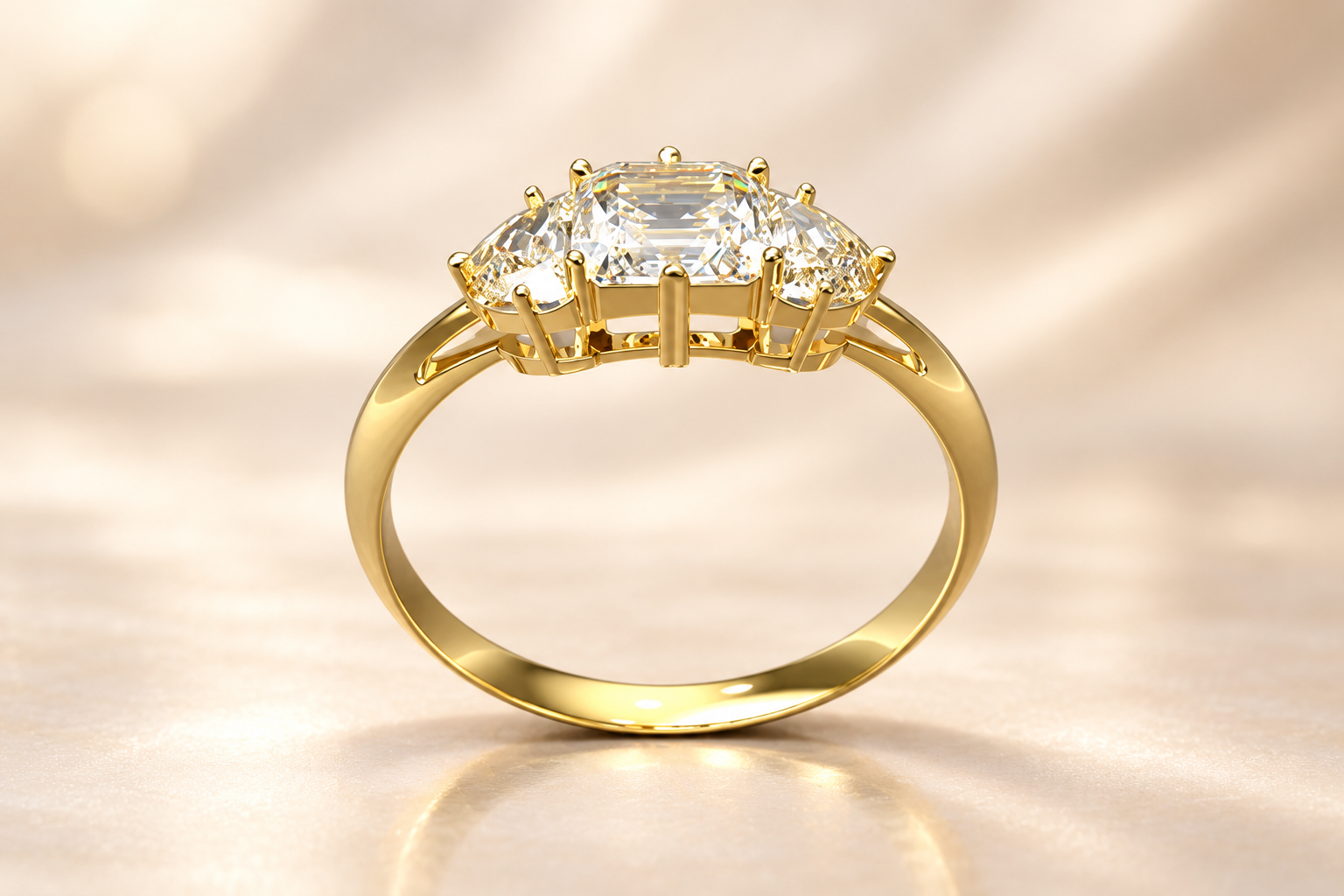
All Brands - All Styles
Browse a broad selection of three-stone diamond engagement rings from featured jewelry brands and merchants.

Browse a broad selection of three-stone diamond engagement rings from featured jewelry brands and merchants.
Browse three-stone diamond engagement rings and jewelry selections from Gem Stone King.
Explore three-stone diamond engagement rings & jewelry pieces from Houston Diamond District.
Browse three-stone diamond engagement rings and jewelry selections from IMOLOVE.
Browse three-stone diamond engagement rings and jewelry selections from MauliJewels.
Explore three-stone diamond engagement rings and jewelry selections from Pompeii3 Inc.
Explore three-stone diamond engagement rings and jewelry selections from THELANDA.
Affiliate Disclosure: DiamondAvenue.com may earn a commission from qualifying purchases made through affiliate links at no additional cost to you.
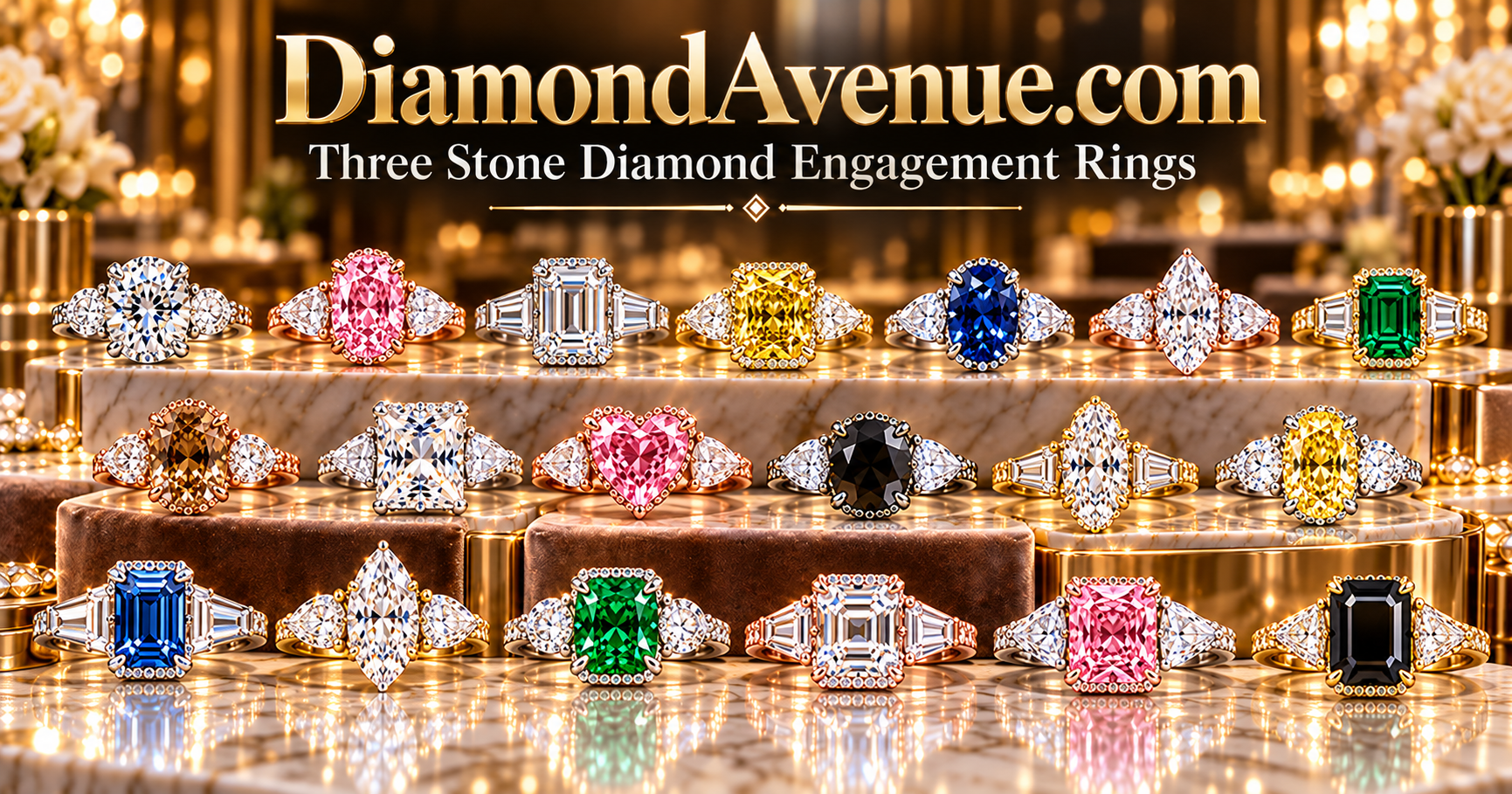
Three-stone diamond engagement rings feature a center diamond flanked by two side diamonds. The design is often associated with the past, present and future, but it is also popular simply because three diamonds can create a broad, balanced and highly brilliant appearance across the finger.
When comparing three-stone rings, look beyond total carat weight. The relative size, shape, quality and placement of all three diamonds, the security of the settings, the width and construction of the band, the metal and the way the ring fits with a wedding band all affect the finished appearance and long-term wear.
A three-stone engagement ring uses one center stone and two side stones arranged as the dominant feature across the top of the ring.
The center diamond is usually larger, but some designs use three stones of nearly equal size for a more uniform look.
Three-stone rings can provide more total diamond presence than a solitaire while keeping the center stone as the main focal point.
The design can also provide strong symmetry and finger coverage without requiring a very wide pavé or multi-row band.
Three-stone rings are often described as representing a couple's past, present and future, with the center diamond symbolizing the present.
This symbolism can be meaningful, but it should not overshadow practical buying considerations such as stone quality, proportion, durability, comfort and craftsmanship.
The relationship between the three stones is one of the most important design decisions. Smaller side stones emphasize the center diamond, while larger side stones create a wider and more dramatic appearance.
There is no single correct proportion. The goal is visual balance when the ring is viewed face-up.
Carat weight alone does not tell you how large each diamond will appear.
Compare face-up millimeter dimensions as well as carat weights.
In a symmetrical three-stone ring, the two side diamonds should generally match closely in size, shape, color, clarity and overall brightness.
Obvious differences between the side stones can make the ring appear uneven.
The side diamonds do not need to carry the exact same grades as the center diamond, but they should complement it visually.
Noticeable differences in color or brightness can become more apparent because the stones are positioned directly beside one another.
Using the same diamond shape for all three stones can create a traditional, symmetrical appearance.
Tapered baguettes, pears, trapezoids and other shapes can visually direct attention toward the center stone and create a distinctive look.
Look at how the three diamonds work together as one composition rather than judging each stone separately.
Three-stone rings are often advertised by total carat weight. Confirm whether the stated figure includes all three primary diamonds and whether additional accent diamonds are included in the same total.
Two rings with the same total carat weight can look very different if one places most of the weight in the center diamond while another distributes the weight more evenly.
The center diamond usually remains the focal point, so evaluate its cut, color, clarity, carat weight, proportions and overall appearance carefully.
A well-cut center diamond can provide strong brilliance and help the entire three-stone design look more impressive.
Higher laboratory grades can affect value, but they do not always create a visible improvement once the ring is viewed normally.
Compare stones with your eyes as well as their grading information.
Each of the three main diamonds should be held securely and sit at an appropriate angle and height.
Check prongs, baskets, bezels or other setting components for symmetry, alignment and adequate protection.
Pear, marquise and other pointed shapes may have vulnerable tips that benefit from protective prongs or setting details.
Secure construction becomes especially important in a ring intended for daily wear.
Three-stone rings can vary considerably in profile. Some place all three stones relatively low, while others raise the center diamond above the side stones.
A higher setting may show more of the diamonds and allow a wedding band to sit closer underneath, but it may also be more exposed to impact or snagging.
The band should provide enough structural support for the center and side-stone settings while remaining comfortable.
Very thin bands can look delicate, but consider whether the construction is substantial enough for regular wear.
Three-stone engagement rings are commonly offered in platinum, white gold, yellow gold and rose gold.
White metals can visually blend with colorless diamonds, while yellow or rose gold can create contrast and warmth.
Three substantial diamonds can create significant width across the top of the finger. This can be attractive, but very wide settings may feel different on smaller fingers or extend toward neighboring fingers.
Check the ring's total top width and the position of the side stones when evaluating comfort.
Three-stone rings can sometimes be resized more easily than full-pavé rings, but the amount of adjustment depends on the band and setting construction.
Rings with additional diamonds down the shoulders or complicated gallery work may have greater resizing limitations.
Determine the correct size before ordering and ask how much the specific ring can be resized in the future.
The width and profile of a three-stone setting can affect how closely a wedding band sits beside the engagement ring.
Some designs allow a straight band to sit flush, while others may require a curved, contoured or custom-fitted wedding band.
Each major diamond has prongs or other setting components that should be inspected periodically.
Normal wear can gradually affect these areas, so periodic professional inspection can help identify looseness or wear before a stone is lost.
Dirt, lotion and oils can collect beneath the stones and reduce brilliance. Follow appropriate cleaning instructions and consider professional cleaning for intricate settings.
A clean ring also makes it easier to notice loose stones or damaged setting parts.
For a significant center diamond, consider an independent laboratory grading report describing characteristics such as carat weight, color, clarity, measurements, proportions, polish, symmetry and fluorescence.
Larger side diamonds may also have individual reports, while smaller side stones are often described by general quality ranges.
When possible, verify grading-report numbers through the issuing laboratory's online report-checking service.
Online photographs are often enlarged. Review actual millimeter measurements, center and side-stone dimensions, total carat information, band width and setting height.
Multiple angles and 360-degree videos can help reveal proportion, profile, setting security and wedding-band compatibility.
Before purchasing, review the return period and determine whether sizing, engraving or customization changes the return policy.
Also check warranty terms for loose stones, repairs, manufacturing defects and any required inspection schedule.
A successful three-stone engagement ring depends on how well the three diamonds work together. The center stone should remain visually important while the side stones add brilliance, width and balance.
Comparing proportions, matching, stone quality, settings, comfort, wedding-band fit and long-term maintenance can help you choose a ring that is attractive, practical and well suited to regular wear.
Diamond Engagement Rings | The Four C's | Diamond Shapes | Diamond Care